Enterprise AI Solutions
for Creative Agencies.
We help agencies, studios, and enterprise teams integrate AI into production through custom workflows, automation, infrastructure, and managed AI platforms.
Architecting systems for
The Current Reality
The AI Era
Has Changed.
Organizations rushed to experiment with generative AI, automation platforms, copilots, and intelligent assistants. Teams began using AI to generate content, analyze data, and accelerate research.
Today, AI is no longer a novelty. It has become a part of everyday work.
Yet a new challenge has emerged. Most organizations have adopted AI. Very few have operationalized it.
The difference between those two realities is becoming one of the most important competitive factors in modern business.
The Problem
Fragmentation over transformation.
Organizations do not suffer from a lack of tools. Creative teams use one set of applications. Operations teams use another. AI creates local improvements while the organization itself remains unchanged.
Adoption without Systems
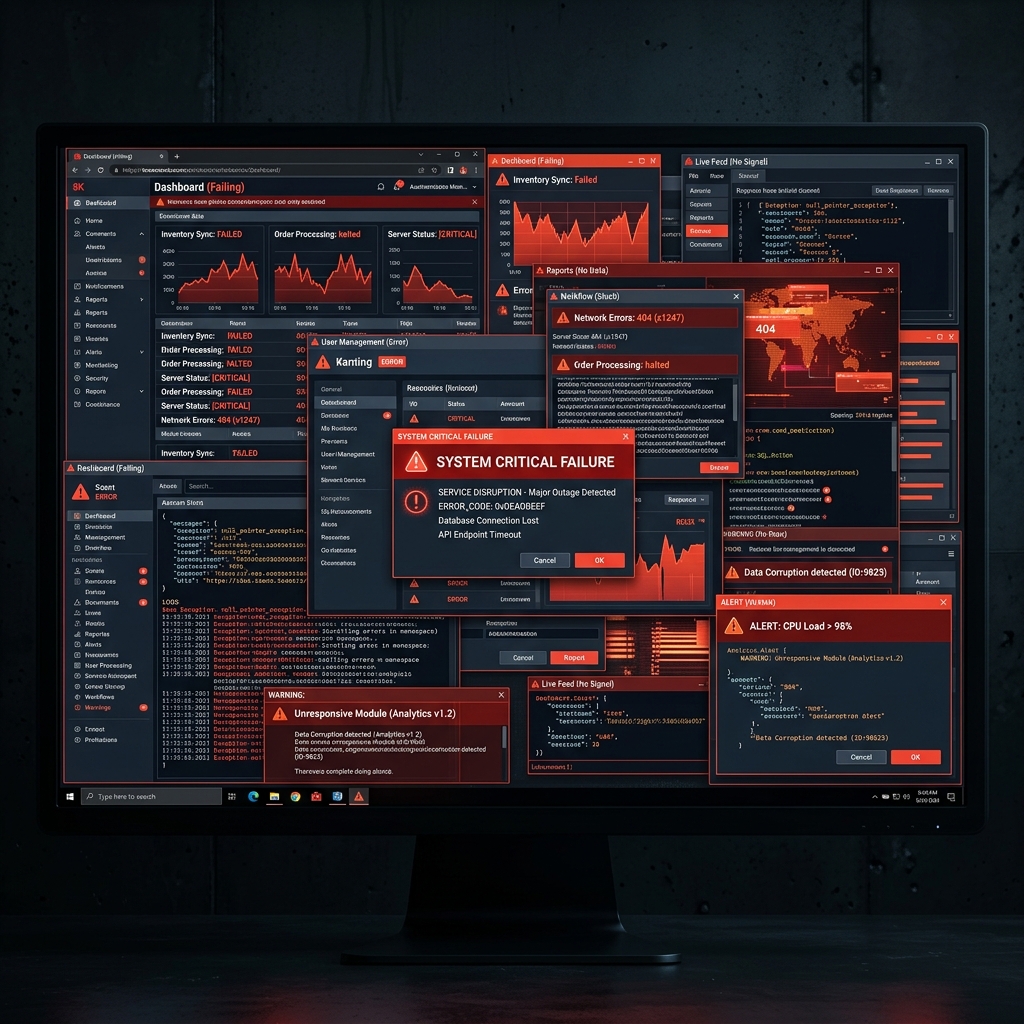
- × Disconnected workflows & duplicate processes
- × Shadow IT and governance challenges
- × The technology works, but the operating model fails
Unified Infrastructure

- ✓ Seamless API interconnectivity across teams
- ✓ Total visibility, RBAC, and asset governance
- ✓ Scalable infrastructure where AI operates at the core
Why Scale Fails
"Processes are undocumented.
Ownership is unclear.
Systems do not communicate."
Businesses become trapped in a cycle of experimentation without transformation. Individual tasks become faster. The business does not.
The Framework
The Real Competitive Advantage.
Sustainable advantage is not created by having the best models. It is created by building the systems around them. Successful organizations share four distinct characteristics.
Repeatable Workflows
Inputs are standardized. Outputs are predictable. Systems execute consistently regardless of team or location. Repeatability transforms AI from a tool into a scalable capability.
Connected Systems
AI generates value when information flows freely. Creative tools, asset repositories, and business operations must function as a connected ecosystem to create leverage.
Clear Ownership
Automation requires accountability. Someone must own workflows, maintain systems, and govern standards. Formal ownership scales faster than informal experimentation.
Governance and Trust
Organizations require visibility into how systems operate and assets are managed. Without governance, automation creates risk. With governance, automation creates confidence.
The Evolution of Modern Organizations
Stage 1
AI-Assisted Operations
AI accelerates individual tasks like content generation or reporting. Processes remain largely unchanged. Value is measured through simple time savings.
Stage 2
Workflow Automation
Organizations build repeatable workflows, connecting systems to automate multi-step processes across users. Value shifts to broader operational efficiency.
Stage 3
AI-Native Operations
Automation becomes the operating model. Systems, assets, and workflows are designed around AI from the start. Value is measured through massive scalability and margin improvement.
AI is no longer a tool.
It becomes infrastructure.
The Foundation
Infrastructure that connects.
Digital Asset Management
Modern DAM systems are no longer simple storage solutions. They have become operational hubs connecting creative production, AI workflows, collaboration systems, and business operations.
Workflow Orchestration
Orchestration creates the connective layer that enables systems to function as a unified ecosystem, eliminating repetitive manual work and allowing organizations to scale seamlessly.
The Human Element
AI does not eliminate the need for people. It changes where people create value. As automation handles repetitive tasks, human effort shifts toward strategy, decision making, creative direction, and innovation.
"Technology alone is not enough.
Human expertise remains essential."
Why MOLNEX
We design and build the infrastructure layer behind modern AI operations. Our focus is not individual AI tools. Our focus is the systems that allow AI to operate at scale.
Sustainable advantage is no longer created by AI adoption alone. It is created by building systems that allow AI to become part of how the organization operates.